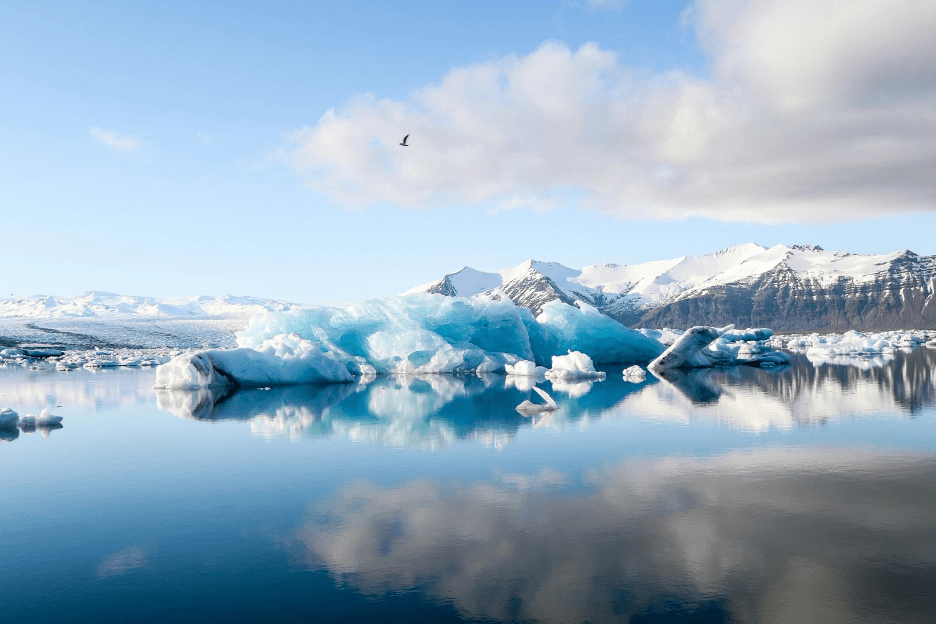
A new report warns that Earth is reaching irreversible climate tipping points, with ice melt and ocean current shifts accelerating faster than scientists previously modelled.
The Greenland Ice Sheet is losing an average of 30 million tons of ice per hour, and if global temperatures continue to climb at today’s rate, sea-level rise could become “unstoppable.” This is just one of the findings in a new 72-page report, authored by over 50 leading climate scientists.
Historically, the cryosphere has responded slowly to changes in temperature and greenhouse gas concentrations. However, the report released on Monday highlights that the current pace of melting far exceeds historical patterns.
“There’s a lot of things that are happening now, that if I’d said some of those things 25 years ago, people would’ve laughed at me,” said Miriam Jackson, climate scientist and co-author of the report. “They’d say, the cryosphere doesn’t change that fast, you don’t understand the science.”
“It just shows that things are happening fast, and happening faster and faster,” Jackson said.
This year, Venezuela followed Slovenia in becoming the second country to lose all their glaciers in modern times. Indonesia’s Puncak Jaya, also known as the “Eternity Glacier,” is likely to follow within two years, marking the end of Asia’s tropical glaciers.
The report’s findings align with concerns raised by 44 climate scientists in an open letter to the Nordic Council of Ministers last month.
The letter warned of the potential collapse of the Atlantic Meridional Overturning Circulation (AMOC), a critical ocean current that distributes heat in the North Atlantic. A collapse of the AMOC could trigger abrupt shifts in regional weather patterns, causing major disruptions to ecosystems and human activities.
The scientists stressed that the collapse risk has been underestimated, with new research suggesting it may occur sooner than anticipated. “We believe more needs to be done to minimize this risk,” the letter stated, urging urgent action to reduce emissions and prevent the breakdown of systems like the AMOC.
Miriam Jackson echoed these concerns, expressing that the countries most at risk to climate changes, often contribute the least to the crisis. “In a lot of cases, the people who are most vulnerable to these changes are the ones who have done the least to cause them,” she said.
 Elisha Walker
Leave a comment